
Guilt-Free Book Club
Each semester, the CTL chooses a book for our Guilt-Free Book Club. This book club strives to be guilt-free in every way. You don’t need to have read to attend, and you are welcomed join in at any time — arriving late, leaving early, or missing a week is perfectly OK!
Spring 2026: Enhancing Inclusive Instruction: Student Perspectives and Practical Approaches for Advancing Equity in Higher Education

By Tracie Marcella Addy, Derek Dube, and Khadijah A Mitchell.
Enhancing Inclusive Instruction centers the voices of students of diverse backgrounds to explore how instructors can approach equitable, inclusive teaching.
Grounded in student perspectives, this book is a powerful call to action for instructors to listen to the voices of their learners, take steps to measure the impact of their approaches, and meaningfully reflect on their efforts. The authors provide practical tools that instructors can use to obtain ongoing feedback on their inclusive teaching efforts, and supply guidance on difficult and emerging topics such as how instructors from diverse backgrounds can navigate inclusive teaching in academe, as well as the implications of generative artificial intelligence on equity and inclusion.
Modeling the importance of continuous growth, Enhancing Inclusive Instruction provides the knowledge and skills to further any college instructor’s inclusive teaching journey.
The book is available as an ebook through The Claremont Colleges Library, and the CTL will provide a limited number of hard copies as well.
If interested in joining fill out this interest form to receive weekly RSVP emails, and order lunch. If interested after the start of the Book Club meetings, January 28th, email us to get on the RSVP list at CTL@claremont.edu.
Previous Book Club Choices:
Fall 2025: The New College Classroom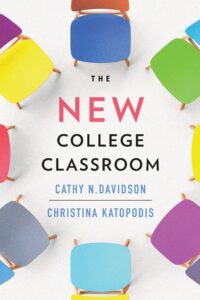
By Cathy N. Davidson and Christina Katopodis
What the latest science of learning tells us about inspiring, effective, and inclusive teaching at the college level.
College instruction is stuck in the past. If a time traveler from a century ago arrived on today’s campuses, they would recognize only too well the listlessness of the lecture hall and the awkward silence of the seminar room. Yet we know how to do better. Cathy N. Davidson and Christina Katopodis, two of the world’s foremost innovators in higher education, turn to the latest research and methods to show how teachers at every kind of institution can help students become independent, creative, and active learners.
The New College Classroom helps instructors in all disciplines create an environment that is truly conducive to learning. Davidson and Katopodis translate cutting-edge research in learning science and pedagogy into ready-to-use strategies to incorporate into any course. These empirically driven, classroom-tested techniques of active learning—from the participatory syllabus and ungrading to grab-and-go activities for every day of the term—have achieved impressive results at community colleges and research universities, on campus, online, and in hybrid settings.
Extensive evidence shows that active-learning tools are more effective than conventional methods of instruction. Davidson and Katopodis explain how and why their approach works and provide detailed case studies of educators successfully applying active-learning techniques in their courses every day, ensuring that their students are better prepared for the world after college.
 Spring 2025: Inclusive Teaching: Strategies for Promoting Equity in the College Classroom
By Kelly A. Hogan and Viji Sathy
In a book written by and for college teachers, Kelly Hogan and Viji Sathy provide tips and advice on how to make all students feel welcome and included. They begin with a framework describing why explicit attention to structure enhances inclusiveness in both course design and interactions with and between students. Inclusive Teaching then provides practical ways to include more voices in a series of contexts: when giving instructions for group work and class activities, holding office hours, communicating with students, and more. The authors finish with an opportunity for the reader to reflect on what evidence to include in a teaching dossier that demonstrates inclusive practices.
The work of two highly regarded specialists who have delivered over a hundred workshops on inclusive pedagogy and who contribute frequently to public conversations on the topic, Inclusive Teaching distills state-of-the-art guidance on addressing privilege and implicit bias in the college classroom. It seeks to provide a framework for individuals and communities to ask, Who is being left behind and what can teachers do to add more structure?
 Fall 2024: The Courage to Teach: Exploring the Inner Landscape of a Teacher’s Life
By Parker J. Palmer
The Courage to Teach speaks to the joys and pains that teachers of every sort know well. Over the last 20 years, the book has helped countless educators reignite their passion, redirect their practice, and deal with the many pressures that accompany their vital work. Simply put, it provides the wisdom that’s been inspiring, motivating, and guiding teachers for more than two decades. The 20th Anniversary Edition builds on a simple premise: good teaching can never be reduced to technique. Good teaching comes from the identity and integrity of the teacher, that core of self where intellect, emotion, and spirit converge – enabling “live encounters” between teachers, students, and subjects that are the key to deep and lasting learning.
Spring 2024:
by James M. Lang
Why is it so hard to get students to pay attention? Conventional wisdom blames iPhones, insisting that access to technology has ruined students’ ability to focus. The logical response is to ban electronics in class. But acclaimed educator James M. Lang argues that this solution obscures a deeper problem: how we teach is often at odds with how students learn. Classrooms are designed to force students into long periods of intense focus, but emerging science reveals that the brain is wired for distraction. We learn best when able to actively seek and synthesize new information.
In Distracted, Lang rethinks the practice of teaching, revealing how educators can structure their classrooms less as distraction-free zones and more as environments where they can actively cultivate their students’ attention. Brimming with ideas and grounded in new research, Distracted offers an innovative plan for the most important lesson of all: how to learn.
Fall 2023: Super Courses: The Future of Teaching and Learning
by Ken Bain
Super Courses is the story of a new breed of amazingly innovative courses that inspire students and improve learning. The story of a hugely important breakthrough in education, Super Courses reveals how these classes can help students reach their full potential, equip them to lead happy and productive lives, and meet the world’s complex challenges.

Spring 2023: Picture a Professor: Interrupting Biases about Faculty and Increasing Student Learning
Edited by Jessamyn Neuhaus
Picture a Professor is a collection of evidence-based insights and intersectional teaching strategies crafted by and for college instructors. It aims to inspire transformative student learning while challenging stereotypes about what a professor looks like. Representing a variety of scholarly disciplines, the volume’s contributing authors offer practical advice for effectively navigating student preconceptions about embodied identity and academic expertise. Each contributor recognizes the pervasiveness of racialized, gendered, and other biases about professors and recommends specific ways to respond to and interrupt such preconceptions-helping students, teachers, and others re-envision what we think of when we picture a professor. Educators at every stage of their career will find affirming acknowledgment of the ways systemic inequities affect college teaching conditions, as well as actionable advice about facilitating student learning with innovative course design, classroom activities, assessment techniques, and more.
Fall 2022: What Inclusive Instructors Do: Principles and Practices for Excellence in College Teaching
by Derek Dube, Khadijah A. Mitchell, and Tracie Marcella Addy
This book uniquely offers the distilled wisdom of scores of instructors across ranks, disciplines and institution types, whose contributions are organized into a thematic framework that progressively introduces the reader to the key dispositions, principles and practices for creating the inclusive classroom environments that will help their students succeed.
Spring 2022: Teaching Community
by bell hooks
Teaching Community: A Pedagogy of Hope (2003) by bell hooks. In Teaching Community, bell hooks writes “about struggles to end racism and white supremacy, [and how] the pervasiveness of racism in society — the worship of whiteness — devalues us all.” She further exhorts us to remember that “teaching can happen anywhere, any time — not just in college classrooms but also in churches, in bookstores, in homes, and any other place people get together to share ideas. Teaching Community encourages us all to embrace the values that motivate progressive social change — spirit, struggle, service, love, the ideals of shared knowledge and shared learning.” (excerpted from the back cover of Teaching Community)

Fall 2021: Ungrading
Edited by Susan Blum
“The moment is right for critical reflection on what has been assumed to be a core part of schooling. In Ungrading, fifteen educators write about their diverse experiences going gradeless. Some contributors are new to the practice and some have been engaging in it for decades. Some are in humanities and social sciences, some in STEM fields. Some are in higher education, but some are the K–12 pioneers who led the way. Based on rigorous and replicated research, this is the first book to show why and how faculty who wish to focus on learning, rather than sorting or judging, might proceed. It includes honest reflection on what makes ungrading challenging, and testimonials about what makes it transformative.” (from the publisher’s description)
Spring 2021: Stop Talking: Indigenous Ways of Teaching and Learning
by Ilarion Merculieff and Libby Roderick
In Stop Talking, Merculieff and Roderick provide both a broad overview of the central aims and goals of “indigenizing education” and a set of specific, focused strategies that instructors can implement in their own teaching. The book serves as a thoughtful introduction to decolonizing pedagogies, placing a good deal of emphasis on practice even as it provides a strong theoretical framework. It’s an ideal read for anyone interested in supporting indigenous studies, students, and pedagogies but just isn’t quite sure where to start.
The CTL envisions this book as the first in a two-semester series, the second of which explores even further the theoretical foundations of indigenous studies. So, while the book club continues to be guilt-free in every way (participants don’t need to have read to attend, and are welcome to join in at any time), we’d be remiss if we didn’t point out the advantages of sticking with the readings throughout the semester. For one thing, since each chapter of Stop Talking details a set of specific indigenous pedagogies, by the end of the book we’ll have gained a wide range of practicable skills to help us begin the process of decolonizing our own classrooms.
Fall 2020: Radical Hope
by Kevin Gannon
Kevin Gannon (aka The Tattooed Professor) offers this insightful look at the ways critical pedagogy can inform some of the most pressing challenges in higher education today. “Harsh budget cuts, the precarious nature of employment in college teaching, and political hostility to the entire enterprise of education have made for an increasingly fraught landscape. Radical Hope is an ambitious response to this state of affairs, at once political and practical—the work of an activist, teacher, and public intellectual grappling with some of the most pressing topics at the intersection of higher education and social justice.” (From the publisher’s introduction)
The book is available as an ebook through The Claremont Colleges Library.
Spring 2020: Geeky Pedagogy
by Jessamyn Neuhaus
Geeky Pedagogy is “the first college teaching guide that encourages faculty to embrace their inner nerd.” This warm, funny book offers all teachers (even non-nerds) evidence-based, effective practices for impactful teaching and learning and invites us to be more aware, compassionate, and reflective in our classroom practice. Plus, there are Star Trek references. You won’t want to miss it!
Fall 2019: Reach Everyone, Teach Everyone
by Thomas J. Tobin and Kirsten T. Behling
In the book Tobin and Behling show that, although it is often associated with students with disabilities, UDL can be profitably broadened toward a larger ease-of-use and general diversity framework. Captioned instructional videos, for example, benefit learners with hearing impairments but also the student who worries about waking young children at night or those studying on a noisy team bus. It includes resources for readers who want to become UDL experts and advocates: real-world case studies, active-learning techniques, UDL coaching skills, micro- and macro-level UDL-adoption guidance, and use-them-now resources.
Spring 2019: Creating Wicked Students
by Paul Hanstedt
This book argues argues that courses can and should be designed to present students with what are known as “wicked problems” because the skills of dealing with such knotty problems are what will best prepare them for life after college. Hanstedt centers the book on the ideat that the goal in the college classroom―in all classrooms, all the time―is to develop students who are not just loaded with content, but capable of using that content in thoughtful, deliberate ways to make the world a better place.
Electronic copies of the book are available through the Claremont Colleges Library.
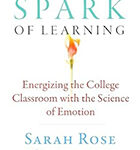
Fall 2018: The Spark of Learning
by Sarah Rose Cavanagh
This book argues that to capture student attention, bolster retention, and boost motivation, we need to consider the emotional impact of how we teach. She brings evidence from education, psychology, and neuroscience, as well as many practical examples of classroom activities from many disciplines.
The Spark of Learning is available online through the Claremont College Library.
Spring 2018: Pedagogy of Freedom
by Paulo Freire
Freire, most famous for Pedagogy of the Oppressed, here offers a meditation on the ethical obligations of educators. He emphasizes recognizing student autonomy, critically reflecting on our practice, and believing in the power of education to truly liberate both students and ourselves.
Pedagogy of freedom is available online through the Claremont Colleges Library.
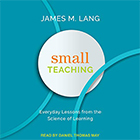
Fall 2017: Small Teaching
by James M. Lang
Research into how we learn has opened the door for utilizing cognitive theory to facilitate better student learning. In Small Teaching, James Lang presents a strategy for improving student learning with a series of modest but powerful changes that make a big difference—many of which can be put into practice in a single class period. These strategies are designed to bridge the chasm between primary research and the classroom environment in a way that can be implemented by any faculty in any discipline, and even integrated into pre-existing teaching techniques. Each chapter introduces a basic concept in cognitive theory, explains when and how it should be employed, and provides concrete examples of how the intervention has been or could be used in a variety of disciplines.
Small Teaching is available online through the Claremont Colleges Library.
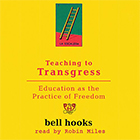
Spring 2017: Teaching to Transgress
by bell hooks
In Teaching to Transgress, bell hooks re-envisions teaching as an emancipatory act in which we enable students to transgress against racial, sexual, and class boundaries. Though she wrote this book in 1994, hooks speaks to critical needs and questions in education today: How do we deal with racism, sexism, and other -isms in the classroom? What should teaching look like in a pluralistic society?
Teaching to Transgress is available online through the Claremont Colleges Library.