
10 Years of Funding Creativity and Innovation
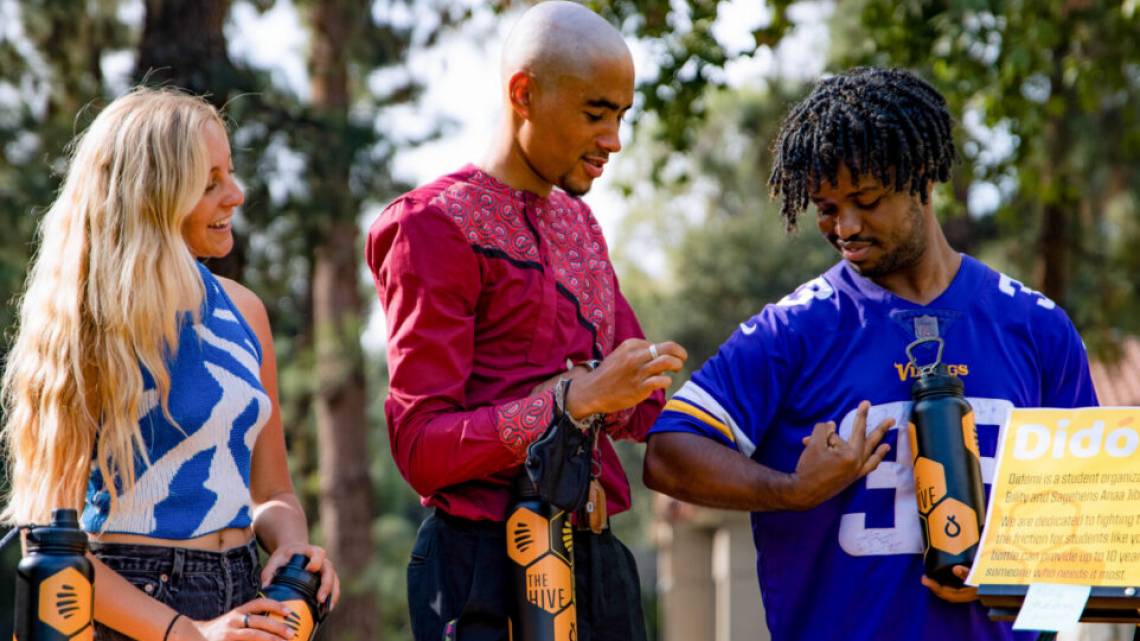

As the Hive marks its 10th anniversary, we reflect on a decade of investing in creativity as a catalyst for design thinking, problem-solving, and impact among students at the Claremont Colleges. Whether through design, art, storytelling, or systems thinking, hands-on creative projects deepen learning and open new, interdisciplinary pathways between people and ideas.
The Hive’s early development was guided in part by consultants from the Stanford d.school, who helped assess campus needs and imagine what a creativity and innovation initiative could offer. Student interest was immediate and palpable, and we wanted to take our vision further. We wondered: as a new center on the campuses, what might a creativity and innovation initiative be able to do for faculty? Our answer took the form of creative teaching spaces in the Hive and a Faculty Course Grant program. These grants foster a culture of experimentation and interdisciplinary collaboration in classes across the humanities and sciences.
When the COVID-19 pandemic disrupted residential college life, the Hive adapted. We launched the Student Creativity Grants, which empower students pursuing self-directed projects with real-world relevance. What began as an adaptive response has remained a core pillar of our work: affirming students not just as learners but as creators and changemakers.
As Linda Shimoda, former Creative Platforms Designer of the Hive, has reflected, “These grants allow curiosity to lead. When we trust students and faculty to experiment, we see work emerge that is both rigorous and deeply human.”
Over the years, we’ve supported hundreds of students and faculty through the grant program, whose projects range from creative making to social impact. This list reflects the breadth of interest and the many forms creative work can take in just one semester, including:
- Website design and community-building projects
- Environmental projects focused on clean air, food distribution, and land preservation
- Rescue vehicle robot
- Film projects
- Dance + sound + scent performances
- Game designs
- Art-curating zines
A few standout creativity grant projects emerged from the following students.
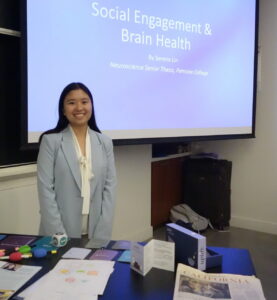 Uplift Notes, created by Serena, is designed to spark meaningful intergenerational conversations. Serena applied for a Student Creativity Grant to develop a new “Memory Edition” of Uplift Notes, expanding the product’s accessibility for individuals living with Alzheimer’s and Parkinson’s and the caregivers who support them. Read more about Serena here.
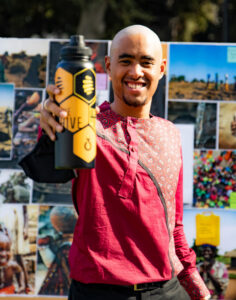 Brian Bishop (Pomona ’22) and Anaa Jibicho (Pomona ’22) developed Didomi, a social enterprise addressing the global water crisis through design and community engagement. Founded with the belief that access to clean water should be universal, Didomi channels proceeds from water bottle sales into long-term water infrastructure projects, with each bottle providing up to ten years of clean, safe water for communities facing water scarcity. Read more about Didomi here.
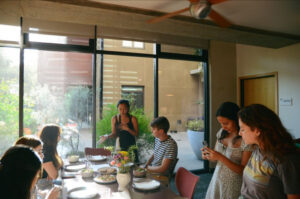 Pomona senior Betsy Ding was awarded a Student Creativity Grant to develop and serve a nine-course tasting menu featuring dishes from third-culture cuisines using ingredients sourced from local farmers’ markets and the Pomona College Farm. The project culminated in a celebratory fine-dining experience for nine students, who were invited to an evening of tasting the culinary and artistic creations.
 Alexandria Nyx, along with 8 cast and crew members from Pitzer, Pomona, and Scripps colleges, created a short film titled Home Is Never Just a Place. The film project explores themes of grief, death, loss, and healing, showcasing a story not typically seen in mainstream media. When Nyx finds out that she’s pregnant shortly after her fiancé’s death, she has to come to terms with the grief and make a choice to keep the baby or not to keep the baby. In this powerful film, we follow Nyx as she journeys through sorrow, healing, and love.
A few standout course grants have come from the following professors.
 Virginie Duzer is a Professor of Romance Languages and Literature at Pomona College and taught a French language class about French fashion. When developing the concept and curriculum for this class, Virginie wanted to create an experience that would involve hands-on learning. Having decided on fashion, she felt that the Hive’s Sewing Shed would be the perfect place for students to put their language skills and creativity into practice, so she applied for a Making Activity Grant. In the course, students learned to sew and design French-inspired garments using only French-language instructions. The Hive supported Virginie’s class with a day of making in the Sewing Shed, guided by a prior Experience Designer, Hunter Sayre. Eighteen students collaborated to create an entire production for the show, including sketches, photos, videos, set design, and the final pieces.
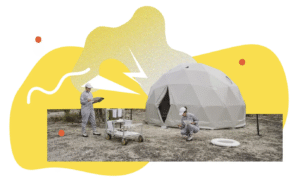 Aly Ogasian is an interdisciplinary artist and Assistant Professor of Art at Scripps College. The Hive’s Course Activity Grants have supported Aly in integrating science- and technology-based skills into her art courses, often by inviting other artists and makers to collaborate and teach in her classes. In an interview, Aly took us on a journey through her creative practice, from the power of curiosity and crazy questions, to her experience living on an artificial island in Kennedy Space Center, to how art acts as a cultural sponge. Read the interview with Aly here.
 Marcus Rodriguez is a professor of Psychology at Pitzer College. He was awarded a grant for a Global Mental Health Seminar course, which introduced students to the key foundations, concepts, evidence, and applications of global mental health. Students engaged in their learning in a variety of ways throughout the course, including mindfulness practices, reading children’s books, student-led discussions, in-class writing and peer-review, writing a research paper, and drafting an original children’s book. Read more about their work here.
- Rachel Mayeri, Jia Yi Gu, and Isabel Beavers are professors of the Humanities, Social Sciences, and the Arts, respectively, at Harvey Mudd College. Their grant supported their students in an experiential learning project in which they visited three exhibitions in the Getty PST: Art and Science Collide series, which offer a unique. exploration of the intersections between art and experiential learning and critical thinking. Students responded to the field trip experience through a range of creative and arts-based methods, including hands-on making projects (video art, sculpture, drawings, and more), creative writing, oral presentation, and analytical writing on a public-facing blog.
For ten years, our grants have transformed curiosity into action and ideas into impact. What started as an effort to create opportunities for faculty as a new campus initiative has grown into a program that empowers both students and faculty to pursue innovative work that matters deeply to them and their communities.
Current Hours
Mon – Thurs | 9am – 9pm
Friday | 9am – 7pm
Weekends | 1pm – 5pm
