
Profiles In Impact: Nina Warner
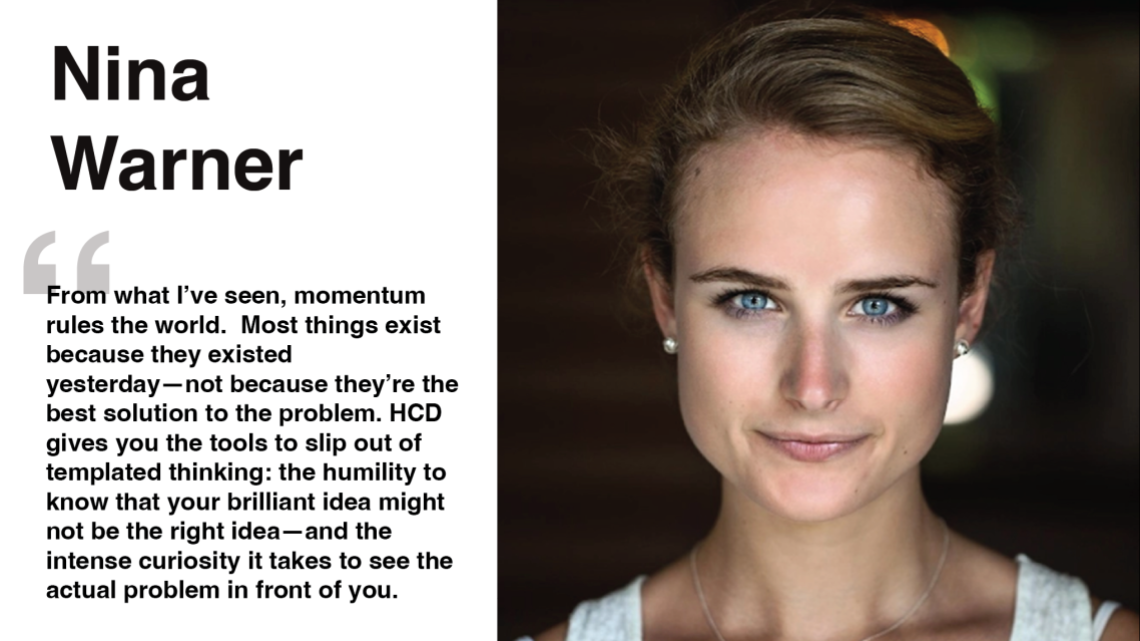
Nina (Pomona 2017, Chemistry), is the Co-founder of Edulis Labs, a materials science company founded in 2022 that is developing a new way to lighten hair without the risks posed by bleach and harsh chemicals—to the customer, the stylist, and the environment.
We’d worked with a lot of high-priced marketing consultants who came up with perfectly reasonable campaigns for our go-to-market strategy. But they all started from a marketing perspective: they were well done—but well-done versions of the same thing everybody else had done. Hire a celebrity spokesperson or come up with a clever ad.
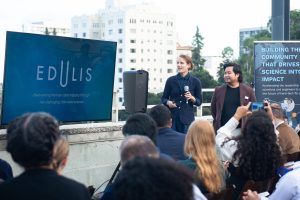
I knew we needed to really open our minds and get at the first principles of the problem we were facing. So I turned to the Hive. I wanted to work with the kind of liberal arts students that I had been: young people whose thinking hadn’t been molded by doing the same job in the same way for a long time. People who could abstract out ideas and approaches from one context and apply them to another.
I was pretty sure that our target was the really innovative consumer—someone who gets excited about the science and the technology, who likes playing with new ideas. But as I watched the Hive students move through their HCD process—going out into the world to learn from people who were actually using our products—I realized that I’d been assuming our customer was basically a version of me.
The Hive teams came in with fresh eyes, interviewed the people involved, observed them operating in their natural state, and read what they were saying on Reddit. They helped us realize that our key stakeholder was not the woman sitting in the chair getting her hair dyed: it was the stylist standing behind her. And that reframed the fundamental problem we were trying to solve. We didn’t need to get people excited about a new technology. We needed to build trust.
Because a stylist is not going to risk a client relationship because some founder talks about how amazing the science is. If they’re skeptical, if they think there’s a chance the product might not work, then no ad is going to fix that. No celebrity ambassador is going to fix that. They have to try it with their own hands.
The student teams came up with a range of ideas that came out of what they’d learned. One group proposed a salon bus, with our hardware inside—so we could drive to salons and let stylists test the product near where they work. Another team came up with a scaled-down version of our product that would let stylists try out our technology without committing to the full thing. Another group rethought our launch order, and suggested we lead with a lower-risk repair product instead of going straight into blonding, which is a high-trust service.
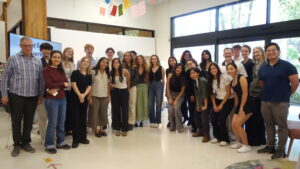
From what I’ve seen, momentum rules the world. Most things exist because they existed yesterday—not because they’re the best solution to the problem. HCD gives you the tools to slip out of templated thinking: the humility to know that your brilliant idea might not be the right idea—and the intense curiosity it takes to see the actual problem in front of you. You won’t get to the “correct” answer as efficiently as the experts in the room. You may lose most of the time. But you might contribute something that has never existed in the world.
Current Hours
Mon – Thurs | 9am – 9pm
Friday | 9am – 7pm
Weekends | 1pm – 5pm
