
Profiles of Impact: Skylar Masuda
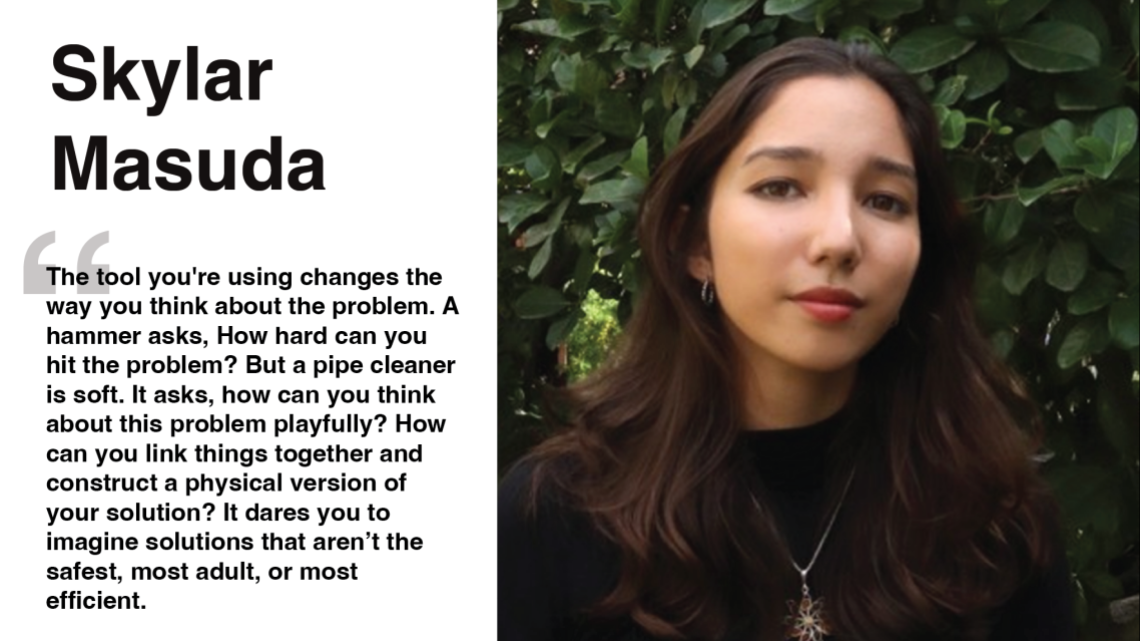

At Pitzer, Skylar double-majored in Human-centered Design and Classics (2024). For her undergraduate thesis, she created Enter the Mithraeum, a project that reimagines the museum visit as an immersive experience. After graduation, Skylar did a Fulbright Fellowship in Istanbul before joining Mattel, one of the world’s leading toy companies, where her team spreads design-driven innovation across the company.
I grew up in Maui, and had no idea what I was getting into when I went to a small liberal arts college in California.
I started taking archeology classes as part of my Gen Ed requirements and loved them so much that I started taking more and more…until, next thing I knew, one of my professors asked if I was thinking about majoring. And at the same time I was getting really into human-centered design. I’d started out just working at the Hive, but soon I was taking courses—and they were completely different from any other classes I was taking.
HCD was the first class where someone really meant it when they asked me: What do you think about this? And then: What would you do about it? They took our ideas seriously, because we’d built them to solve real people’s problems. Outside clients from companies and nonprofits were really listening to us, because they needed the ideas we were coming up with. In most of school, you’re taught to be a problem recognizer, or a problem commentor. But nobody ever teaches you to imagine that you could be the one to do the solving.
I’ve always loved amusement parks, because of how they put you back in your body. All your senses get activated, and nothing happens in the way you’re used to. Maybe you remember almost nothing from being 4 years old, but you do remember meeting Mickey Mouse—because it clicked you out of autopilot. But my love for amusement parks had always felt like this secret part of me that would never really matter. Until Fred started asking me why I liked them. And the more we talked, the more I realized that the things I love about amusement parks were the things that felt missing from museums—and I started to see how I could bring these things together in a crazy, crazy way.
So I started investigating people’s experience at museums: interviewing guards who worked there, and friends and other students who visited. They used words like cold and boring. They felt both overwhelmed and underwhelmed.
At the same time, my archeology courses were helping me understand how this feeling of exclusion came from the history of museums—the centuries of colonialism, the way they’re constructed to put stolen objects on display. I became increasingly aware of what happens when an artifact is pulled out of its context—its story—and set next to an official exposition on the wall where someone from a different, dominant culture assigns it a meaning.
As part of my senior thesis, I got to interview several theme park designers, and I learned about how they create environmental stories—by designing the context around the objects. It got me wondering how the museum experience might put you inside the history it was trying to tell. So I created a space that replicated an underground Mythraic temple, complete with the smells and textures that are essential to how these artifacts signify. A place where people could walk inside, and encounter all these different artifacts, with walls and a ceiling and a scale that all relate to each other. Instead of the knowledge and the thing living separately, you’ve got the knowledge living within the thing. For my senior show, I got to see my professors and my friends get as excited about this ancient religious cult as I am.
At Mattel, my team helps toy designers learn about what matters to the kids they’re designing for—and we keep experimenting with different ways to give them a more physical, more immersive encounter with marketplace trends and user insights. A feel for the world kids are living in. We want to unleash a kind of creative thinking that soaks the entire space. So even when you’re catching lunch in the cafeteria, you’re thinking of new ideas and slipping out of your old ways of thinking.
Current Hours
Mon – Thurs | 9am – 9pm
Friday | 9am – 7pm
Weekends | 1pm – 5pm
